Namibia | The Last Wild Places
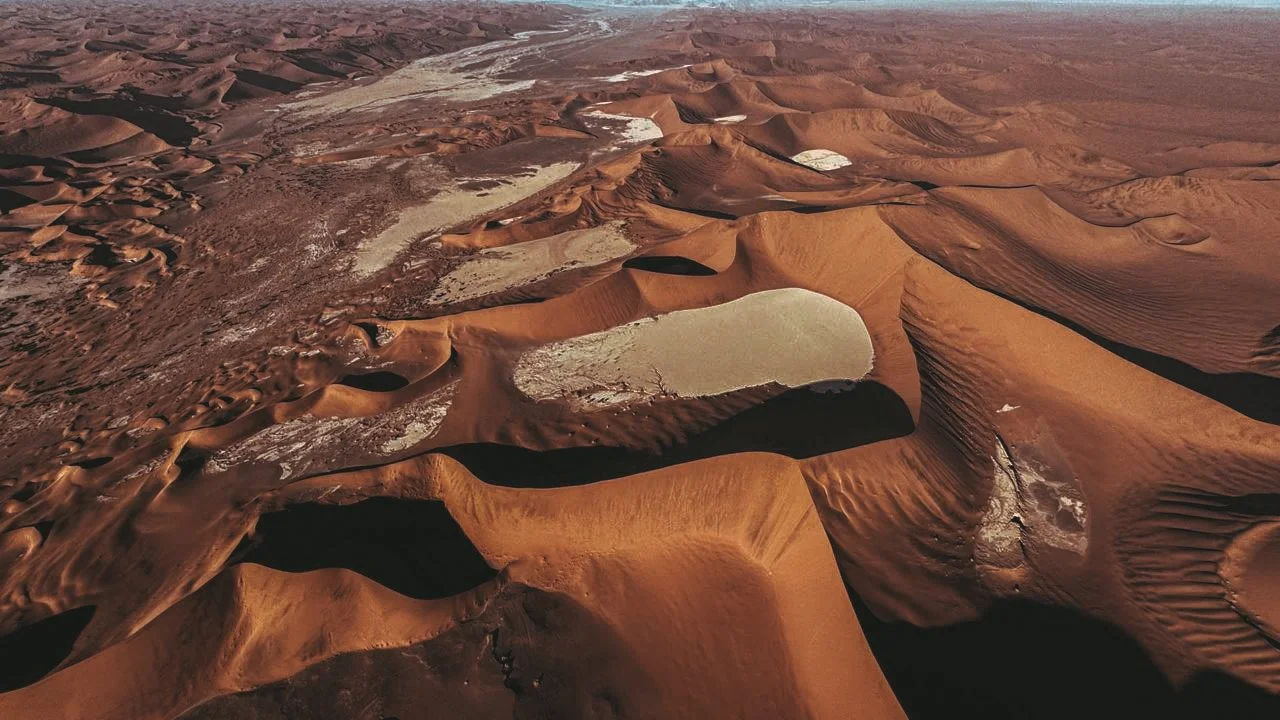
There are places that make you recalibrate your sense of scale. Namibia is one of them, a country so vast and so sparsely inhabited that solitude here is not a luxury but simply the default condition. This twelve-night journey was designed around that quality: the feeling of being genuinely alone in a landscape that has looked the same for millions of years. It began in the dunes of Sossusvlei, where an early morning balloon flight over the apricot sands of the Namib, the oldest desert on earth, gave way to sunrise at Deadvlei, the ancient white clay pan where five-hundred-year-old camel thorn trees stand blackened and still against terracotta dunes. Three nights at Little Kulala, set within a private concession on the edge of the park, provided the base. From there, the route moved south into the NamibRand Nature Reserve, one of Africa's largest private reserves and one of only a handful of International Dark Sky Reserves on the planet, where nights at Wolwedans Dunes Lodge ended with a guide, a telescope, and a sky so dense with stars it felt almost solid. The Skeleton Coast followed: a place of such primal strangeness, shipwrecks half-buried in sand, desert-adapted lions, the roar of the Atlantic against ancient dunes, that it demands a different kind of attention altogether. Shipwreck Lodge, twelve cabins on the beach in one of the most remote stretches of coastline in Africa, provided the setting. The journey concluded in Damaraland, where two days tracking desert-adapted elephants on foot with specialist guides from Hoanib Skeleton Coast Camp, and an afternoon spent with a San community learning to read a landscape that most eyes pass over entirely, brought the trip to a close. Twelve nights in a country that makes everywhere else feel a little crowded.